You are the story engineer.
See what your story is doing, and out-engineer anything a machine could write.
Story Health charts, measured against masterworks and your own revisions. Narrastat never writes a word for you.
Invite-only · Free during the beta · Desktop app, built for a computer screen · Your manuscript stays yours
Real charts from the Narrastat app · Dracula
Compare it
Set your draft beside the books you love.
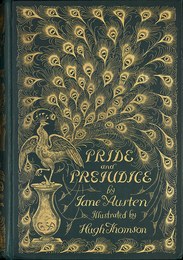
Here are two of them, charted in Narrastat: Pride and Prejudice and Dracula. Put your own draft next to either one, chart for chart.
What each scene is made of
Pride and Prejudice
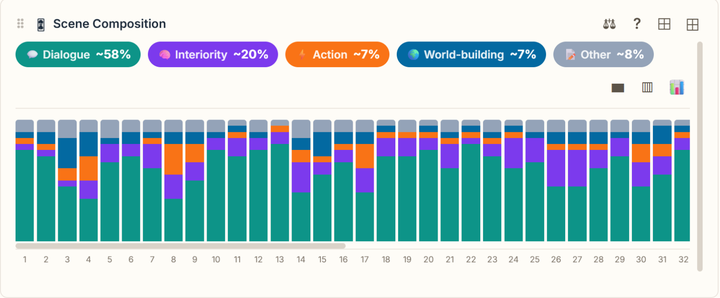
Pride and Prejudice is about 58% dialogue.
Dracula
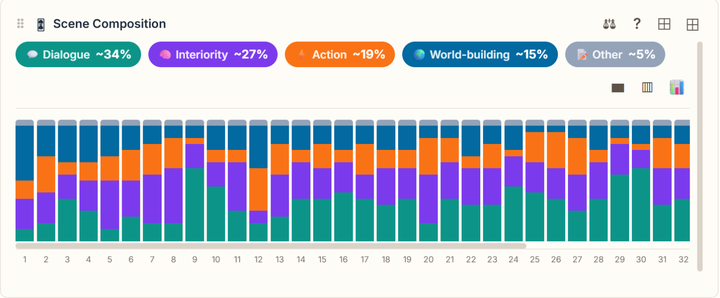
Dracula is about 34% dialogue, 27% interiority and 19% action.
Stakes, scene by scene
Pride and Prejudice
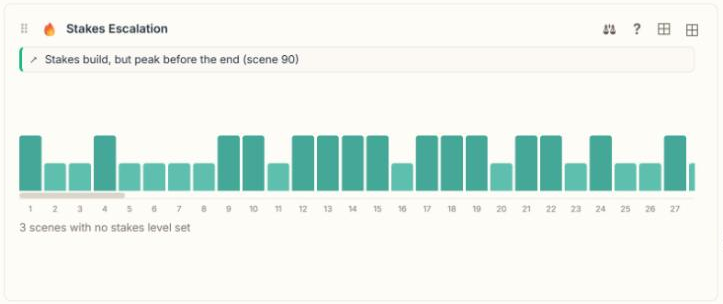
What is at risk in each scene of Pride and Prejudice, and how it builds.
Dracula
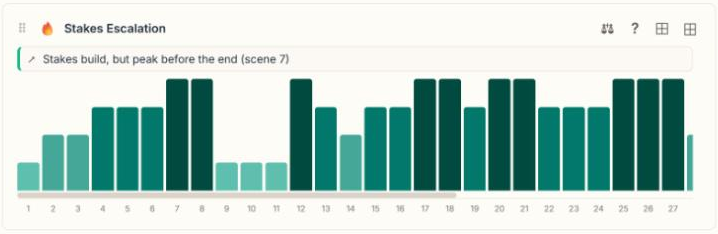
What is at risk in each scene of Dracula, and how it builds across the book.
What each character wants, and needs
Pride and Prejudice
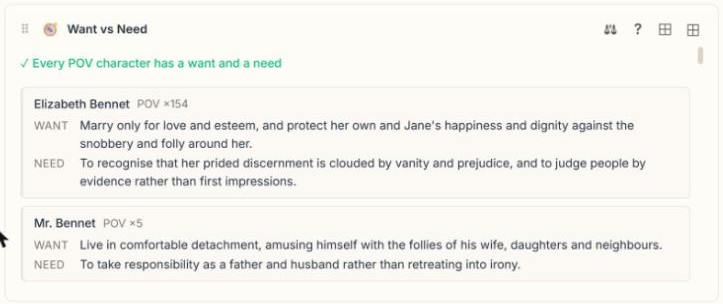
Every viewpoint character in Pride and Prejudice has both a want and a need.
Dracula
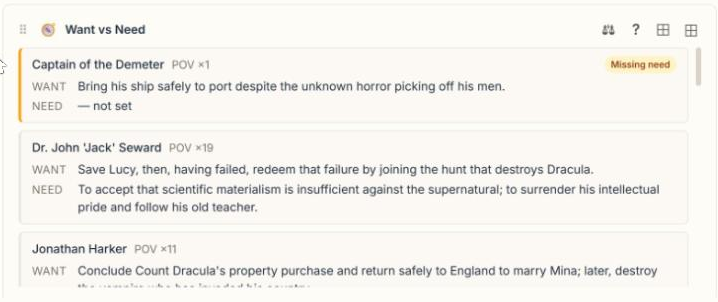
Each viewpoint character's want set against their need, with the gaps flagged.
Pacing, scene by scene
Pride and Prejudice
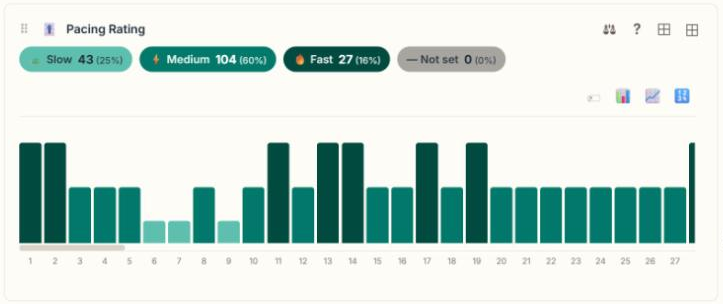
Fast scenes make up 16% of Pride and Prejudice.
Dracula
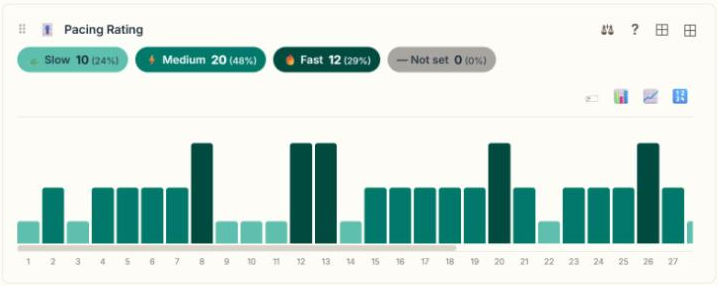
Fast scenes make up 29% of Dracula.
Setups and payoffs
Pride and Prejudice
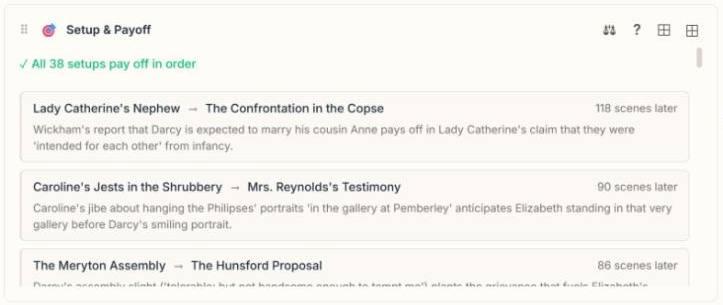
All 38 setups in Pride and Prejudice pay off in order.
Dracula
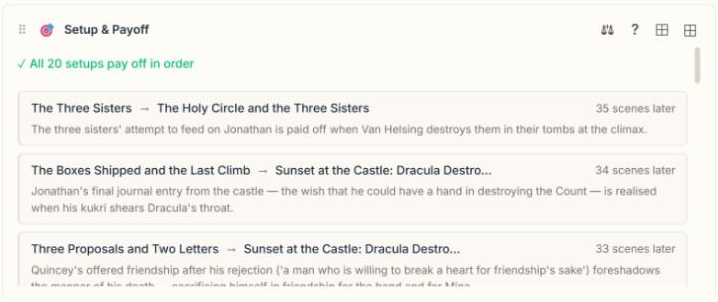
All 20 setups in Dracula pay off in order.
Who carries the story
Pride and Prejudice
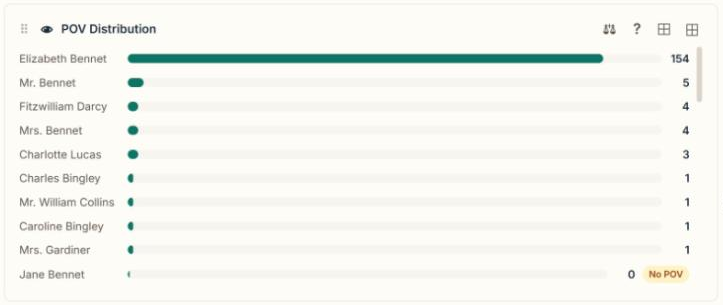
Elizabeth Bennet holds the viewpoint in 154 of 174 scenes.
Dracula
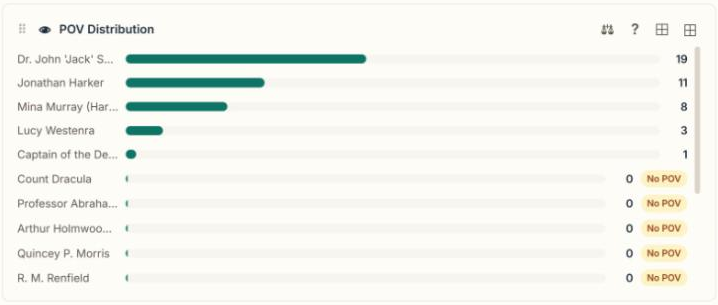
Dracula passes the viewpoint between five characters.
Scene length
Pride and Prejudice
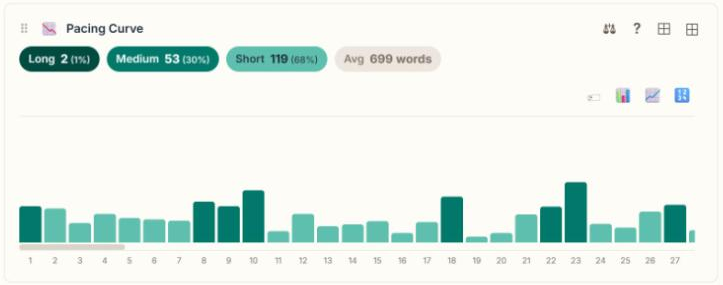
Average scene in Pride and Prejudice: 699 words.
Dracula
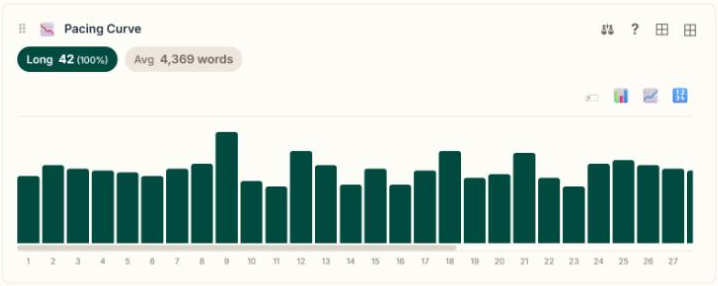
Average scene in Dracula: 4,369 words.
Story arcs covered
Pride and Prejudice
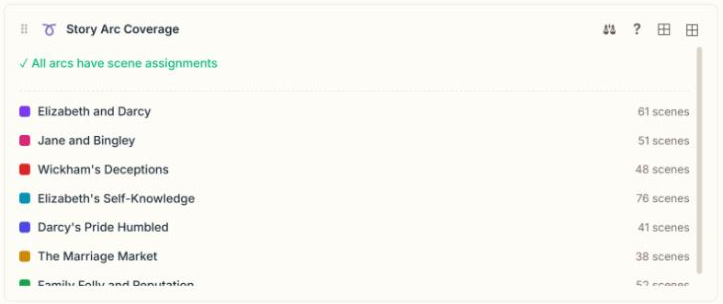
All seven story arcs in Pride and Prejudice have scenes assigned.
Dracula
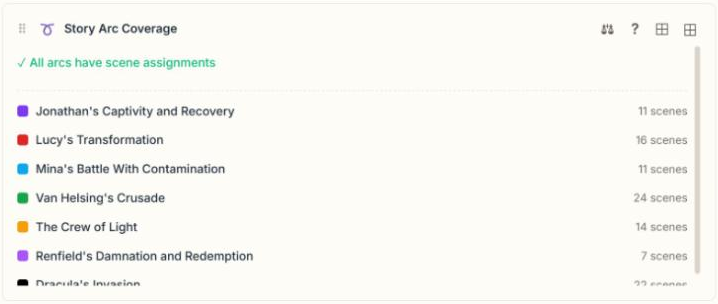
All seven story arcs in Dracula have scenes assigned.
How specific the words are
Pride and Prejudice
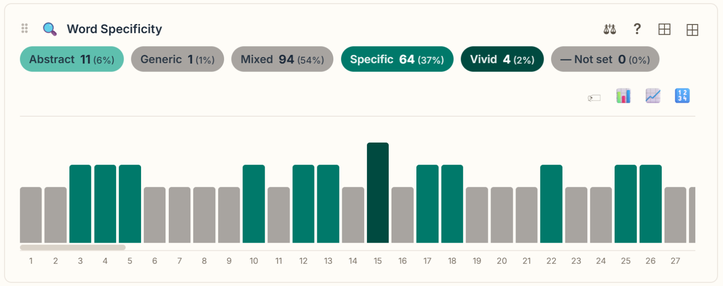
In Pride and Prejudice, 54% of scenes are mixed and 37% specific.
Dracula
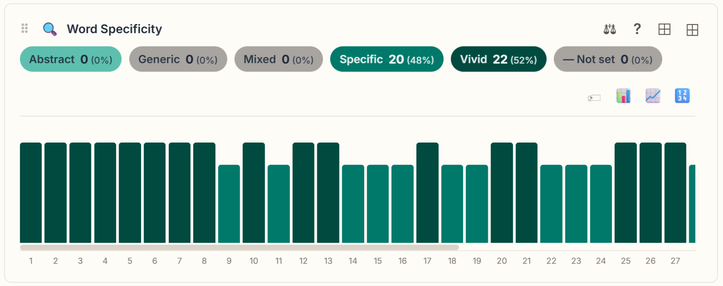
Every scene in Dracula reads as specific or vivid.
Real charts from the Narrastat app, captured 10 and 12 October 2026. Both novels are in the public domain. Cover images: Wikimedia Commons, public domain.
See it
Everything your draft is telling you, made visible.
Import the manuscript you already have. Narrastat shows you its shape in charts, not opinions.
Character
What your hero wants, and what they need
See where the two pull against each other, scene by scene.
Plot
Whether each scene earns the next
Find the stretches that run on “and then” instead of “therefore”.
Scenes
Where scenes fall flat
Spot the scenes where nothing changes for your character.
Plot
Setups and payoffs
Every thread you planted, and whether it pays off.
Plot
Stakes that build
What is at risk in each scene, and whether it rises to the climax.
Scenes
Scenes that repeat
Pairs of scenes that share the same tone, viewpoint and place.
Character
Who has gone missing
The longest stretch each character spends off the page.
Character
Who carries the story
How many scenes each character narrates, and how many they appear in.
Character
Where characters clash
Scenes where one character's wants run into another's.
Pace and tone
Pacing, scene by scene
Scene length across the whole book, and where it runs slow or fast.
Pace and tone
Tone across the book
How the mood moves from one scene to the next.
Structure
Your beats, mapped
Scenes set against your plot framework, with empty stages flagged.
Structure
Story arcs covered
Which arcs have scenes, and which have gone quiet.
Structure
Themes that hold
Which scenes carry your themes, and which carry none.
Engineer it
You make every change.
- 1
Import your manuscript
Upload a Word document or paste your text. Narrastat splits it into scenes.
- 2
Read the charts
See your Story Health, with flags where the story drifts.
- 3
Study the masterworks
Open a masterwork and see how its story is built, chart by chart.
- 4
Compare them against your work
Set your charts beside theirs and see where your story differs.
- 5
Revise, then compare again
Make your changes and put the drafts side by side to see what changed.
Your words stay yours
The story is yours. So is the proof.
Narrastat measures the story you wrote. It never writes, rewrites or suggests a line, and your story is never used to train generative AI models.
- Zero AI Rewriting
- Zero AI Suggestions
- Your words stay yours
Pricing
Free while we're in beta.
Use Narrastat free during the closed beta. When paid plans do arrive, everyone who was here during the beta keeps a lower rate, for as long as they stay.
FAQ
Questions, answered.
Will Narrastat rewrite my book?
No. Narrastat is analytics, not a ghostwriter. It reads the draft you wrote and shows you how it is working. Every word stays yours.
Is my manuscript private?
Your manuscript is yours. In the app, your manuscript is never stored. It is analyzed to generate your statistics, and only metadata and your statistics are saved, under the Narrastat app privacy terms. Your story is never used to train generative AI models.
What can I import?
Upload a Word document or paste your text. No special formatting required.
What kinds of books does it work with?
It is built for novel-length fiction across genres.
What does it cost?
Narrastat is free during the closed beta. When paid plans do arrive, everyone who was here during the beta keeps a lower rate, for as long as they stay.
Does Narrastat use AI?
When you import a manuscript, AI reads it to tag each scene so the charts can be drawn. It never writes or rewrites your prose.
Be your own story engineer.
Import your draft and see its Story Health in minutes. Free during the beta.